Full-Grain vs Top-Grain vs Genuine Leather: What's the Difference?
Walk into any shop and you'll see belts labeled "genuine leather", "top-grain", "full-grain" or simply "real leather". They all sound good – but they describe very different materials, and the difference shows after a few months of wear. Here is a plain explanation from the workbench.
First, how a hide is split
A cowhide is thick – too thick to use as it comes. Tanneries split it into layers. The top layer, the one that was the outside of the animal, is the strongest and most beautiful part: its fibers are tight and dense, and it carries the natural grain – the pores, marks and texture that make leather look like leather. The lower layers are looser and weaker. Every leather grade comes down to which layer you get and how much of it has been sanded or covered.
Full-grain leather
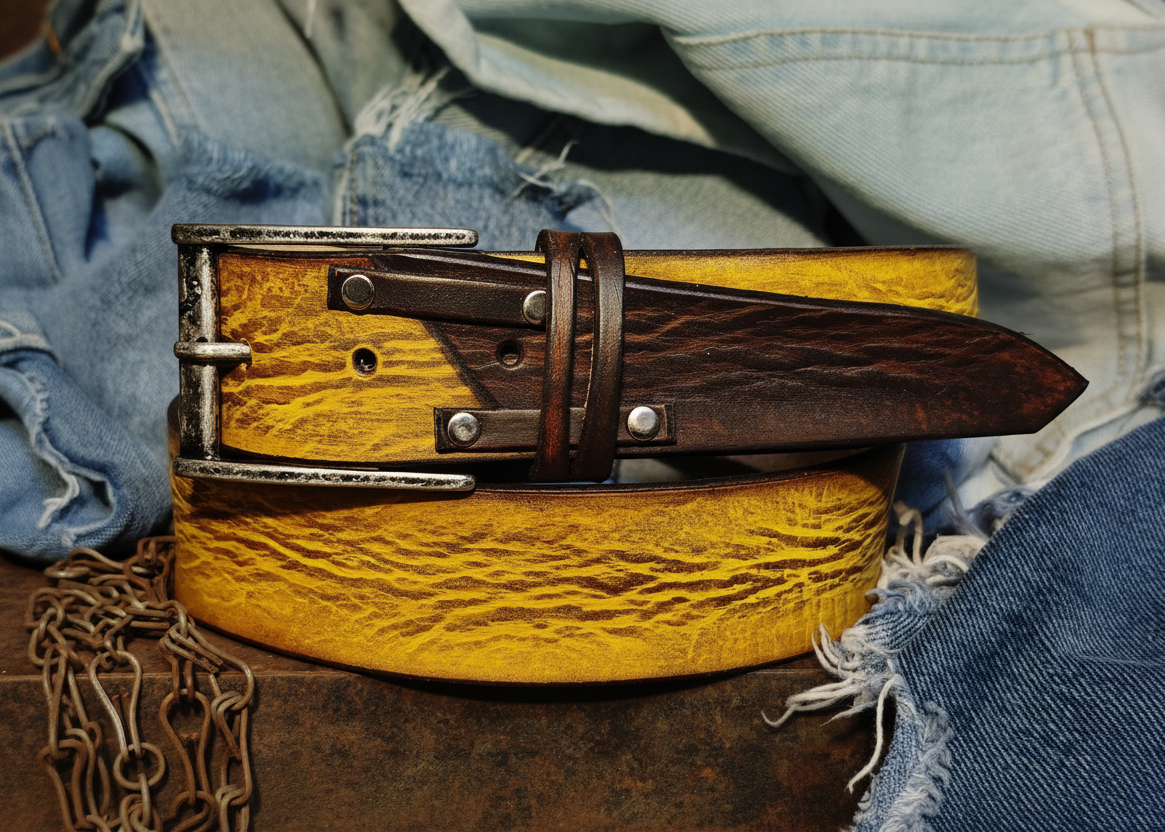
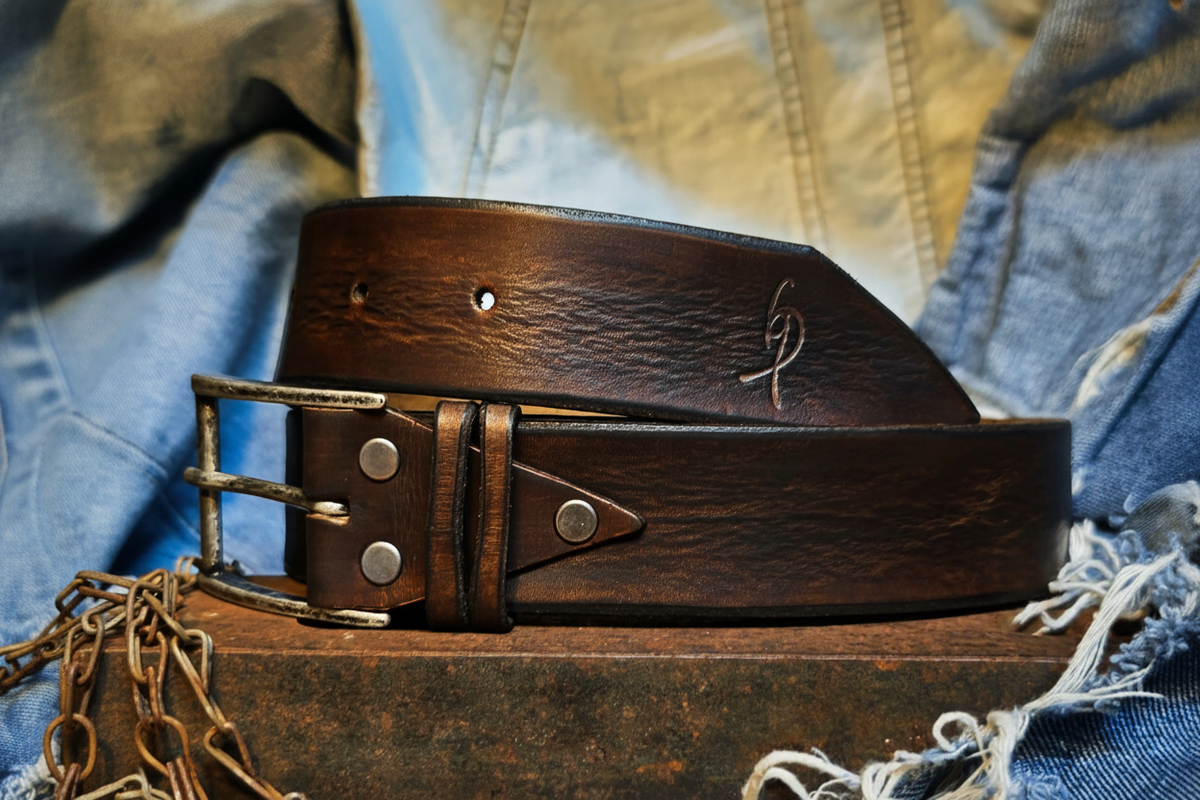
Full-grain is the complete top layer, with the natural surface left intact. Nothing is sanded away, so you keep the strongest fibers and all of the character: small scars, variations in color, the natural pattern of the hide. That is why full-grain is the most durable grade and why it develops a patina – it darkens and softens with use instead of wearing out.
It's also the most honest grade. Because nothing is hidden, only good hides can be used this way. Every ISHAOR belt is made from full-grain leather – read more about the leather we use.
Top-grain leather
Top-grain also comes from the top layer, but the surface has been sanded or buffed to remove marks, then usually sprayed with a finish to make it look even. The result looks smooth and uniform, but it has lost some of its strongest fibers and won't develop the same patina. Top-grain is common in mid-range bags and furniture.
Genuine leather
This is the label that surprises most people. "Genuine leather" is real leather – but it is usually made from the lower, weaker layers of the hide (often called split leather), with an artificial grain pressed or painted on top. It looks fine in the shop, but genuine leather belts tend to crack, peel and stretch much sooner than full-grain.
Bonded leather
Bonded leather is made from leftover leather scraps and fibers glued together onto a backing, then coated. It contains only a small amount of real leather and is the least durable option. It often peels in layers.
How to spot full-grain leather
- Look at the surface. You should see natural pores and small irregularities. A perfectly even, plastic-like surface usually means a corrected or coated grade.
- Look at the edge. On a well-made belt the edge is solid leather, burnished or painted by hand – not layers glued together.
- Smell and feel. Full-grain leather smells like leather, feels firm but flexible, and warms in your hand.
- Check the price. A belt at fast-fashion prices is rarely full-grain.
Why we only use full-grain
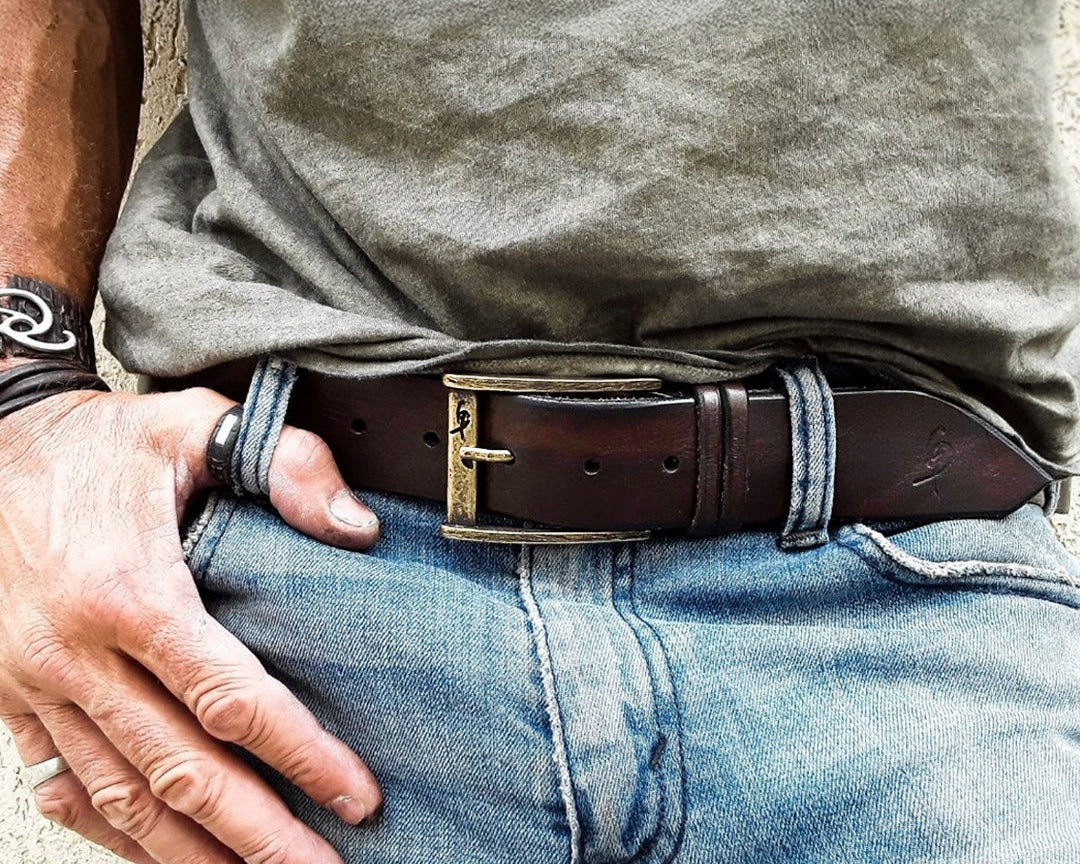
We like to say perfect is plastic. The marks and shade differences in full-grain leather are not defects – they are proof the material is real, and they're what makes every belt one of a kind. A full-grain belt, cared for properly, can last for decades. Explore our classic everyday belts or our signature belts to see it for yourself.

Written by Ishai Duiker